
News
3 min read
June 10, 2026

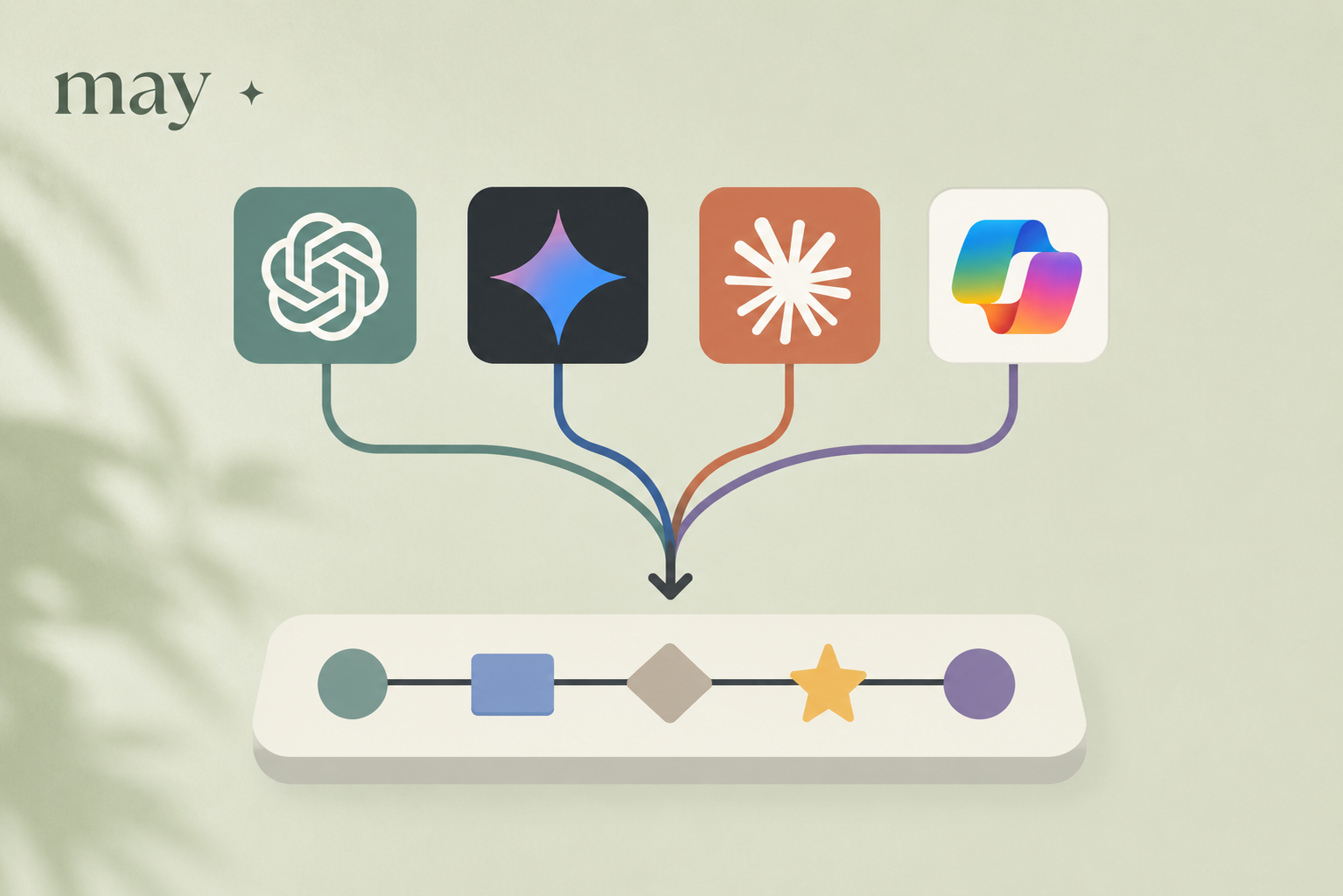
A short field guide to a month that pushed agents from demo to default. What each release means in plain language and what to do about it.
May 2026 was another dense month, with all four major platforms shipping meaningful updates.
The month's consistent theme is that agents are no longer experimental. Read on for the details.
Results and takeaways
Two meaningful releases:

GPT-5.5 Instant became the new default in ChatGPT on 5 May. The headline number is a 52.5% reduction in hallucinated claims on high-stakes prompts in medicine, law, and finance. That's a significant reliability improvement for anyone using ChatGPT for research, drafting, or analysis where getting things wrong matters.
Codex can now run for hours, hold state across sessions, and operate directly inside Excel and Google Sheets. The model plans, writes, executes and corrects code with minimal input.
Source: openai.com
Claude Opus 4.8 shipped on 28 May, building on 4.7 with what Anthropic describes as sharper judgement, improved honesty about uncertainty and stronger agentic coding performance. For anyone using Claude for complex tasks with multiple steps and tool use, this is a major improvement.
Claude Code now runs multiple subagents in parallel to handle complex tasks faster. There are also new effort controls that let you dial how much work Claude puts into a response. This is useful when you want a quick draft versus a thorough analysis.
Source: anthropic.com
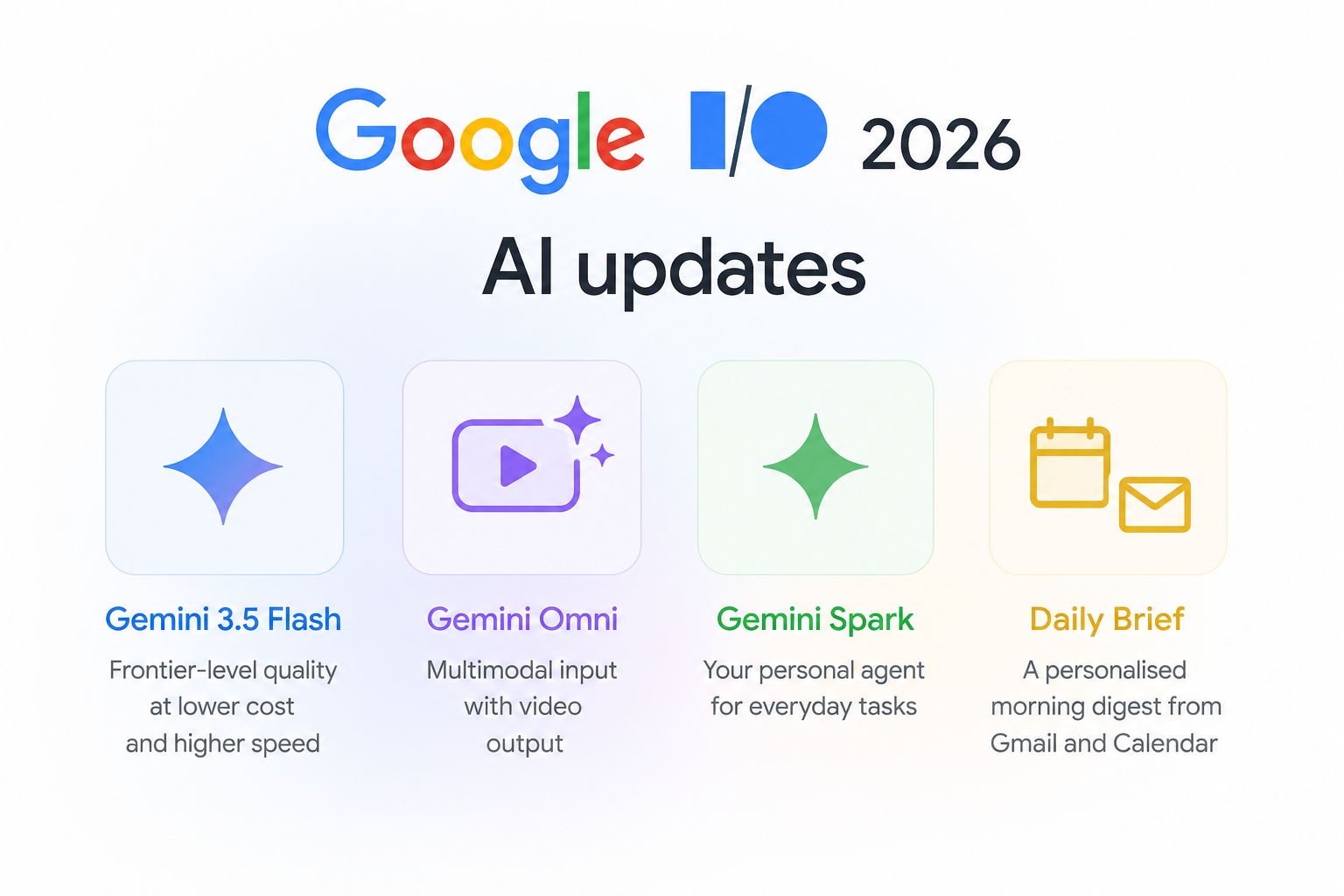
Google's I/O 2026 developer conference on 19 May was headlined by Gemini 3.5 Flash, a model Google is positioning as frontier-level quality at much lower cost and much higher speed. We put it to the test against Claude Opus 4.7 in this month's newsletter feature. We found that while the speed claim holds, speed isn't always what you need.
I/O was overflowing with new product announcements, but three other products caught our eye.
Gemini Omni takes multimodal input further with video as an output format, not just text and images. Gemini Spark is a personal agent that works on everyday tasks in life and business, such as booking travel, browsing the internet on your behalf and keeping your files in order. Daily Brief is a personalised morning digest built from your Gmail and Calendar.
Source: blog.google
Microsoft pushed a significant M365 Copilot update on 28 May. The interface has been rebuilt around an adaptive, task-aware workspace, with the idea being that the layout adjusts to what you're doing, rather than you switching between Copilot and your apps.
From our perspective, the Copilot ecosystem layouts keep changing so quickly that it’s hard to keep track of what is where. Microsoft could afford to be a little more deliberative about the changes, as we’re finding clients are getting lost, sometimes thinking that their favourite tools have disappeared when they’ve actually just moved to a different spot on the screen.
Copilot Studio also gained computer-using agents. This means automation that navigates software the way a person would, without needing API access. That's a big deal for organisations with legacy systems or apps that don't have clean integration options.
Microsoft also announced that it’s building a Copilot super app that unifies GitHub Copilot, Copilot Chat, and Cowork before the end of the year.
Source: microsoft.com
Every major platform is moving toward AI that acts with autonomy across your entire workflow. Codex runs for hours. Gemini Spark takes actions across your digital life. Opus 4.8 orchestrates parallel subagents. Microsoft builds agents that navigate software like a person.
The chat window is still there, but it's increasingly a fallback. The primary interface is becoming AI woven into the workflow itself.
Three takeaways for the people we work with:
Take agents seriously. This month saw agents move closer to the workplace default. If your mental model of AI is still "ask a question, get a response," it's time to update. Think about one task in your workflow that runs on a predictable process and start to assess your options. That's a good starting point.
Reliability. Gemini 3.5 Flash is fast, but GPT-5.5 Instant's 52.5% hallucination reduction is perhaps more useful for the average organisation. When choosing tools for work where errors have grave consequences (legal, financial, medical, comms) the accuracy benchmark is particularly important.
Integration. Microsoft's Copilot super app. Google's Daily Brief. Gemini Spark. The direction is AI that has access to your full workflow and can act on that information.
If you'd like to talk about what any of this means for your team, that's the work we do. AITC runs hands-on training and advisory engagements for organisations that want their teams to use AI safely and effectively. Get in touch